by Melisa Nirmaladewi
Melisa Nirmaladewi is one of the participants in the Democracy Laboratory program, facilitated by Pamflet Generasi with support from the Digital Democracy Initiative. The Democracy Laboratory is a learning and sharing space for young people on social and political issues in everyday life, running from August to September 2026. Through this note, Melisa dismantles the illusion of “individual life choices” and invites readers to place democracy and politics within everyday life as citizens. In particular, within the negotiation between citizenship, the body, and the city space.
Once, democracy felt to me like someone else’s business. It appeared once every five years through billboards by the roadside, candidate debates on television, and purple-inked fingers uploaded to social media. After that, it returned to its place, inside the government buildings of the capital, which felt far from the bedrooms of children in the regions.
That view slowly changed. Not because I read thick political books, but because of small things that kept repeating: waiting for a bus that never comes, calculating whether the motorbike taxi fare still makes sense this month, choosing a brighter route home even though it is longer, or opening an air quality app before deciding whether to exercise outdoors.
Eventually I realized that all of this was really about choices. And, it turns out, those choices were not entirely mine.
I can choose to take public transport, but only if there is a route that can take me to my destination. I can choose to walk, but only if the sidewalk is available and adequate. Even choices that feel personal, like when to go home or which road to take, are sometimes shaped by something much bigger than myself.
From there, I began to see a connection that was not clear before: how living as a personal project ultimately meets public space, how individual choices are shaped by decisions we make collectively, and how democracy can truly be present between the two.
Seeing Life Through the Lens of the “Personal Project”
Our twenties are a time when everyone seems to agree that life is a personal project. We are asked to choose the right career, manage our finances with discipline, decide who to build relationships with, and plan five years ahead. If we fail, it is our own fault: not enough effort, not smart enough at managing time, not resilient enough.
I once fully believed that view, until I tried to live “better” and ran into limits I could not overcome alone. I wanted to take public transport, but the route did not reach where I live. I wanted to walk more often, but the sidewalks were broken and used for motorbike parking. I tried to reduce plastic waste, but the trash I had sorted still ended up in the same place.
At that point I began to ask: really, how free am I to choose?
That question led me to Development as Freedom by Amartya Sen (1999). One of his ideas that stuck with me sounds simple: freedom is not only about not being prohibited, but about having the real capability to live a life we value.
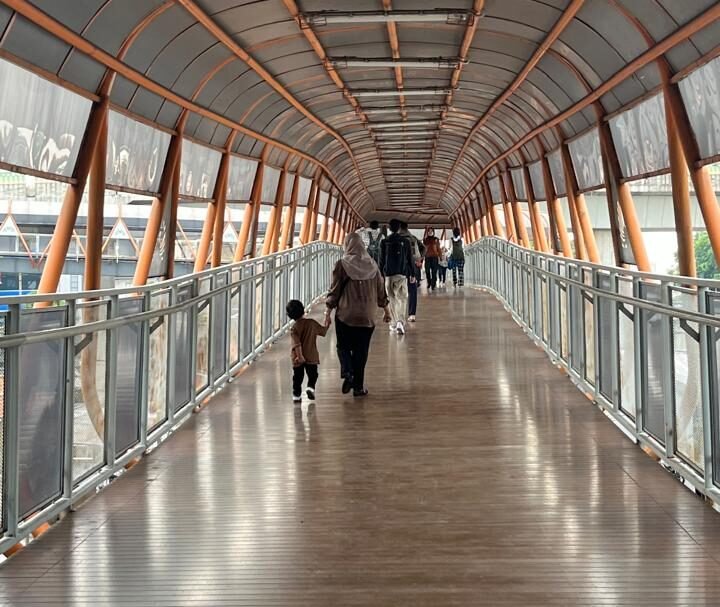
Photo: Author’s personal documentation.
This idea made me look back at those small choices. Being allowed to take public transport does not mean I truly have a choice if the route is unavailable, the fare is unaffordable, or the trip home makes me feel unsafe. The right to live healthily also becomes abstract when the air we breathe is polluted or access to clean water is uneven.
In other words, personal choice requires social conditions that make it possible to actually carry it out.
This is where the life I had considered a personal project begins to intersect with politics. Because many things that determine how wide my choices are, I do not decide alone. There are transport policies, spatial planning, environmental quality, the prices of basic needs, employment systems, and various other decisions made in the name of the common interest.
I started to see democracy in a slightly different way. Democracy is not only about who may vote or who is elected, but also about how collective decisions shape the space of possibilities in everyday life. Because in the end, democracy determines not only who holds power, but also the conditions that allow us to live the lives we choose.
The Right to Space and Safety
If our life choices are never fully personal, the next question is: where is the boundary between private life and collective decisions? One answer lies in public space.
Henri Lefebvre introduced the idea of the “right to the city” to show that a city is not just a collection of roads and buildings; it is a living space shaped by social, economic, and political relations. Living in a city does not automatically give us equal access to it. Some can enjoy parks, cleaner air, safe homes, and comfortable transport. Others have to live in flood-prone areas, close to sources of pollution, or far from public services.
That difference often looks like a matter of housing or economic circumstances. But the more I think about it, the clearer it becomes that it also concerns who has the freedom to use space and who must keep adjusting to it.
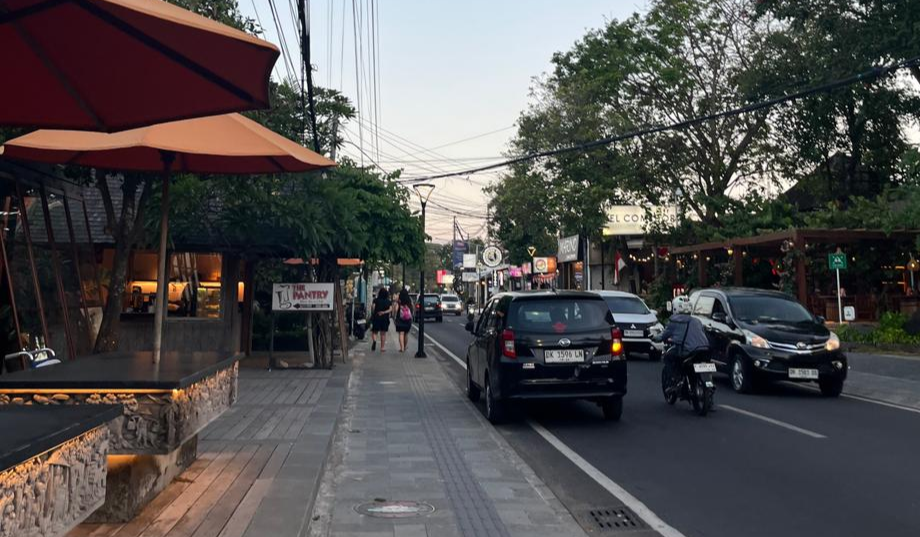
Photo: Author’s personal documentation.
As a woman, I feel that public space is never really just about space. It is also about the body: how the body dresses, moves, is looked at, and feels safe within it. Before leaving the house, there is a series of considerations that almost automatically run through my mind: whether this outfit is “safe” enough, what time I should be home, and which emergency contact should be ready to call in a critical situation.
Sometimes I forget that all those calculations are not normal in the first place. That some people can leave home, walk alone, come back late, or simply enjoy a city without constantly calculating the possible harm that could happen to themselves and their bodies.
Leslie Kern, in Feminist City: Claiming Space in Man-Made World (2020), argues that the city is not neutral. It is built on assumptions about who belongs, who is safe, and whose needs matter.
The city and its dynamics are not entirely neutral spaces. The way a city is designed and used always carries assumptions about who is considered entitled to feel safe, who is considered to belong in certain spaces, and whose needs end up dominating the considerations.
Still on how a city is built, Kern raises a simple question that unsettles: “Could the flâneur be female?” In the urban tradition, the figure of the flâneur describes someone who can stroll through the city, observe the life around them, and enjoy public space freely. But such freedom is not always available to women. Women’s experience of the city is often shaped by fear, caregiving work, and the need to constantly negotiate space.
For me, this is where the relationship between the body, public space, and democracy becomes more tangible.
When a woman chooses a brighter road even though it is longer, chooses to go home before night, or avoids certain spaces because she feels unsafe, the decision may look like a personal choice. But if the same experience is shared by so many women, perhaps the problem is no longer merely personal. Choices that must constantly be made because a space is unsafe are a sign that something in that space needs to be questioned collectively.
Democracy, in this sense, does not only give us the right to be present in public space. It also concerns how that space is designed so that more people can be present in it without having to shrink themselves, restrict their movement, or constantly live in fear.
From the Personal to Collective Awareness
Perhaps this is where I began to understand why personal choices can be part of democracy.
One person choosing to take public transport may not change the transport system. One woman choosing to walk on a brighter road may not change the design of a city.
But when the same experience is repeated by many people, personal choices begin to form patterns. And when that pattern is recognized as a shared problem, it can turn into a public demand.
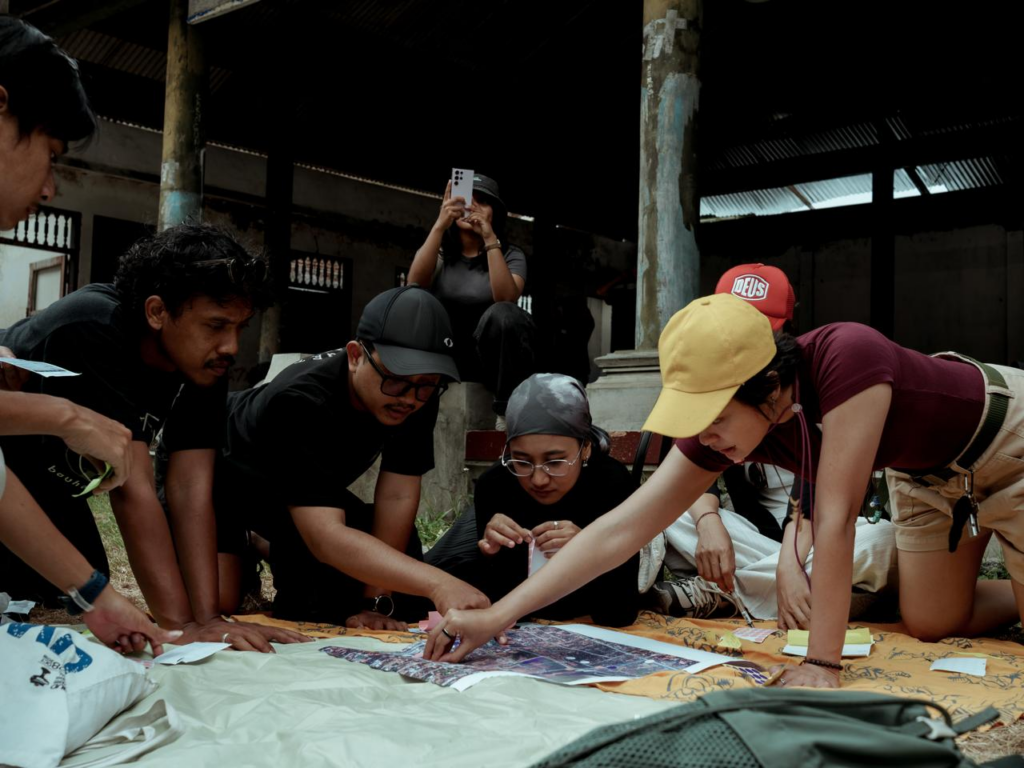
Photo: Documentation Nuturang.
I think collective awareness does not always start from big slogans. Sometimes it starts from a very simple sentence that comes to mind: “I experience this too.”
At some point, experiences that once felt like personal failure or difficulty begin to appear as something with a pattern. And when we start to see the pattern, we can begin to ask: who created this condition, who benefits, who bears the consequences, and what can we change together?
Perhaps democracy works precisely in the space between those questions.
Elections, parliaments, political parties, and courts certainly remain important. But I want democracy to be felt in more ordinary places too. When I can check air quality through open and trustworthy public data. When I can take public transport at night without gripping my phone tightly. When women can use public space without constantly calculating the risks to their bodies.
I still want to be free to decide my own life: what work I do, who I share my life with, where I live, and what my future looks like. That desire has not changed. What has changed is my understanding that freedom needs a foundation.
Not everyone can choose to walk. Not everyone can choose the healthiest food, a home free from flooding, work without exposure to pollution, or a safe trip home. Not always because they do not want to choose, but because that choice is simply unavailable or unaffordable.
So perhaps the question of democracy is not only “do citizens have choices?” but also “are those choices truly available to everyone?”
The second question takes us out of ourselves. It transforms what once felt personal into something that can be discussed, debated, and fought for as a common interest. And perhaps that is where democracy truly begins to feel close.
Not when we stand in front of the ballot box once every five years, but when we realize that the small choices in our lives never stand alone. That the roads we walk, the air we breathe, the spaces we occupy, and the safety we have are the results of decisions made together.
In the end, democracy is not only about the freedom to choose the life we want. It is also about building shared conditions so that more and more people truly have the opportunity to choose.