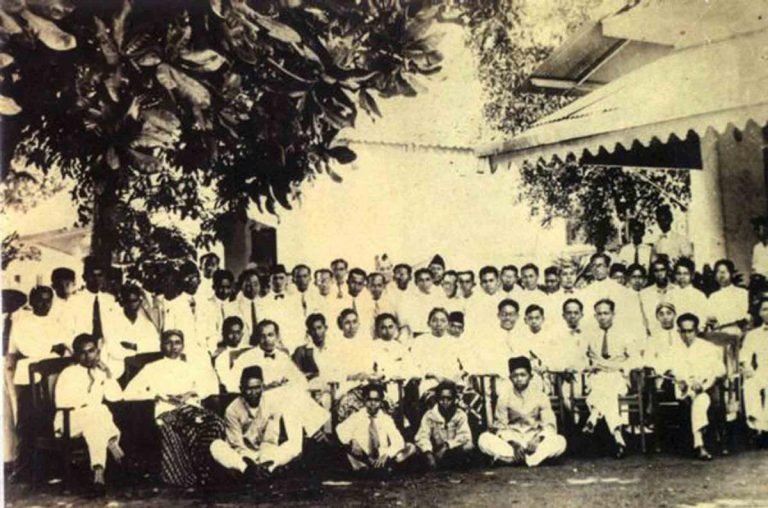
89 years ago, young people from various regions gathered for the Second Youth Congress, which produced a congress resolution, not the Sumpah Pemuda (Youth Pledge) we know today. The term Sumpah Pemuda actually first appeared 29 years after the Second Youth Congress was held. At that time, Soekarno held a fairly large-scale commemoration of the Youth Pledge. The Youth Pledge was then used as a campaign tool by Soekarno to quell various regional rebellions.

Seeing that the Youth Pledge could stir up a spirit of unity and oneness, the Youth Pledge campaign continued in 1961 in the struggle to reclaim West Irian. Then in 1963, the Youth Pledge served as a reminder that the struggle against the plan to form the Federation of Malaysia must go on. The Youth Pledge was also used to ward off popular Western cultural symbols in 1959, which were considered likely to damage Indonesian culture. In short, Soekarno made very good use of three points from the Second Youth Congress, namely having one homeland, one nation, and one language: Indonesian, to stir a spirit of unity and quell rebellions in the regions.
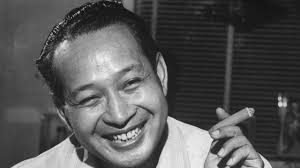
During President Soeharto’s time, there was his own way of interpreting the Youth Pledge: continuing to use the name Sumpah Pemuda, but with a different spirit and purpose. Soeharto used the Youth Pledge to support his government, which prioritized discipline, stability, and security. As a result, violent approaches were used against anyone who tried to find another meaning of ‘unity and oneness’. In this era, many studies were also conducted on the history of the Youth Pledge, one of them being the work of B. Soelarto, From the First Youth Congress to the Youth Pledge (1986), which contains a collection of historical events between the first congress (1926) and the second congress (1928).
Now, after Soeharto fell, the Youth Pledge is directed toward appreciating the various differences that exist in Indonesia. Especially because after Soeharto’s fall, inter-ethnic riots broke out in several regions. Besides that, debates about whether the Youth Pledge should be celebrated at all have also begun to emerge, especially on social media. The freedom to seek information means that everyone is free to interpret the Youth Pledge, without first being force-fed by the government.
Well, how do you interpret it yourself?